
Guanciale vs Bacon: Taste, Fat, Smoking & Uses
They both deliver pork and fat — but smoke, sweetness, and cut change the dish completely.
Side-by-side
| Guanciale cut | Pork jowl |
|---|---|
| Bacon cut | Usually pork belly (sometimes side) |
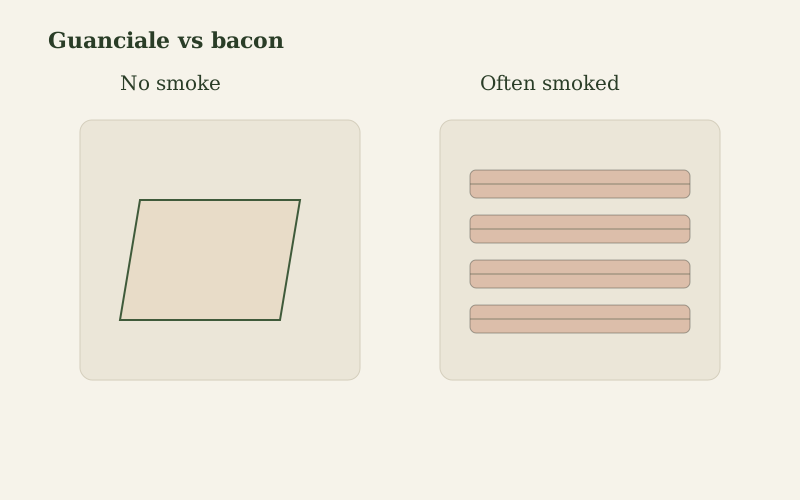
| Smoking | Guanciale traditionally no; bacon often yes |
| Sweetness | Bacon curing can be sweeter |
| Roman pasta | Guanciale is the authentic choice |
| Swap quality | Unsmoked bacon is better than smoked |
The smoking problem
Smoke is the biggest practical difference. Classic guanciale is cured and air-dried. Most supermarket bacon is smoked. In carbonara, smoke fights the egg and pecorino instead of supporting them.
Taste and fat
Guanciale tastes peppery, savory, and richly porcine. Bacon often brings sweetness, smoke, and a crisp breakfast-meat profile. Guanciale fat tends to feel silkier in a sauce; bacon fat can taste heavier and more assertive.
When bacon is acceptable
If guanciale (and pancetta) are unavailable, choose thick-cut unsmoked bacon or pork jowl if your butcher has it. Render gently and consider reducing any added salt, since bacon can be saltier and sweeter.
Full substitute guidance: guanciale substitutes.
Better comparison for Italian cooking
For most Italian recipes, the more useful comparison is guanciale vs pancetta. Pancetta shares the unsmoked cured-pork profile even though the cut differs.