
What Is Guanciale?
Guanciale is Italian cured pork from the pig’s cheek and jowl — a fatty, peppery cornerstone of Roman cooking.
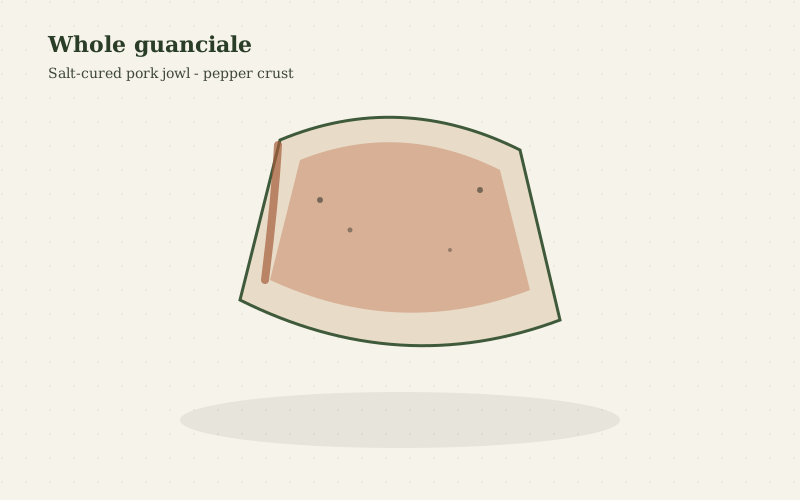
Guanciale at a glance
| Literal meaning | From Italian guancia — cheek |
|---|---|
| Cut | Pork jowl / cheek |
| Process | Salt-cured, seasoned, air-dried |
| Smoked? | Traditionally no |
| Signature dishes | Carbonara, amatriciana, gricia |
A short definition
Guanciale is not “Italian bacon,” even though people often introduce it that way. Bacon is usually belly and often smoked. Guanciale is jowl, cured and dried, and prized for how its fat melts into a sauce.
In the kitchen, that fat behaves like a seasoning and a cooking medium at once. Rendered guanciale coats pasta, carries pepper and pecorino, and gives Roman dishes their unmistakable depth.
What part of the pig?
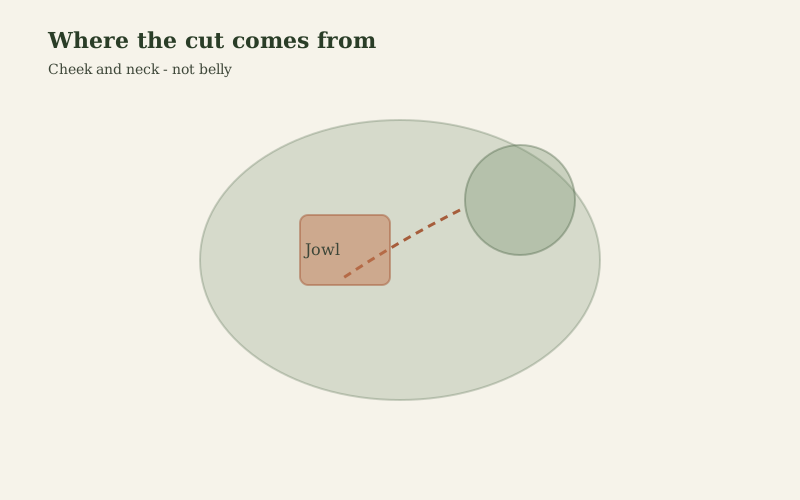

The jowl sits along the lower face and neck area of the pig. It contains streaks of meat woven through abundant fat. That composition is why guanciale can look almost triangular or slab-like when whole, with a visible fat cap and a seasoned exterior.
How it is typically seasoned
Salt and black pepper are the baseline. Some producers add chili, rosemary, garlic, or wine depending on regional style. The seasoning sits on the exterior and slowly works inward during curing and drying.
For the production process step by step, see how guanciale is made.
Why cooks care so much

Guanciale’s fat has a different mouthfeel from pancetta. It renders into a clearer, more unctuous liquid fat that emulsifies beautifully with pasta water, egg, and cheese. That is why purists insist on guanciale for authentic carbonara rather than smoked bacon.